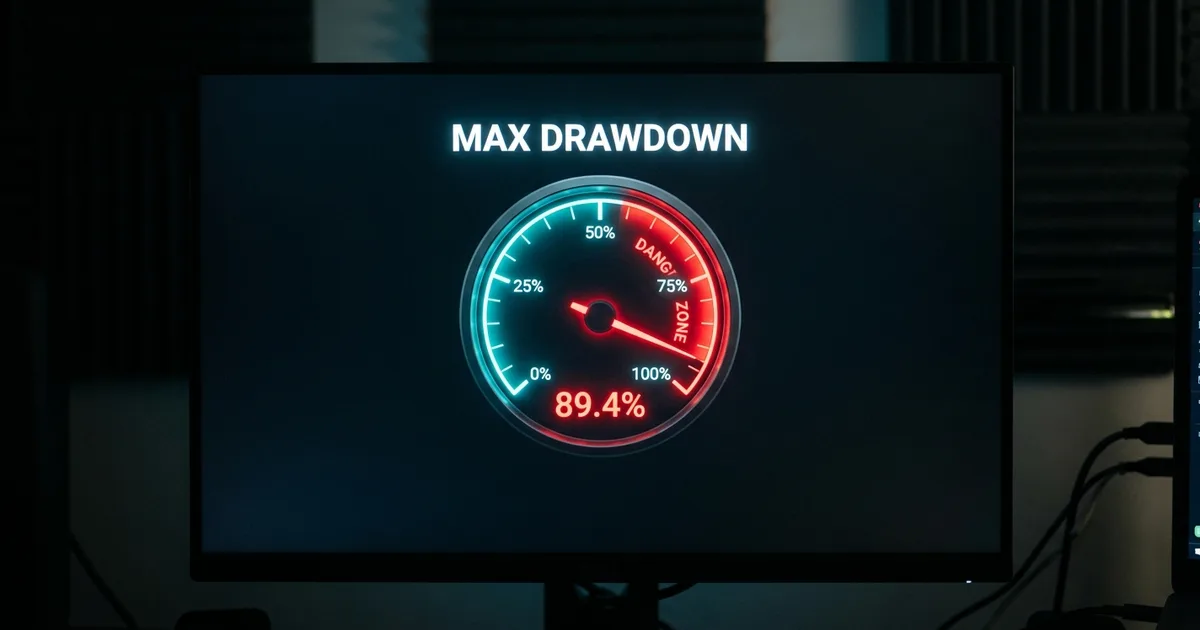
Funded accounts don't usually fail because of a bad trade. They fail because a risk rule gets misunderstood or ignored - and prop firms don't all use the same rule, or even the same definition of a rule with the same name. This is a plain-English breakdown of the risk rules that actually decide whether you keep the account: daily loss limits, trailing drawdowns, consistency rules, and the position sizing that keeps you away from all three.
Not every "drawdown" means the same thing
A daily loss limit resets every session. A trailing max drawdown follows your account's highest balance ever reached and never resets down. The two get talked about interchangeably and they are not the same rule - mixing them up is one of the most common ways a trader misjudges how much room they actually have.
Consistency rules measure the shape of your trading, not the total
A consistency rule caps how much of your total profit any single day is allowed to supply. An account can be net profitable and still fail this check if one lucky trade did too much of the work. It's a check on repeatability, not on whether you made money.
Position sizing is the rule that prevents the others from mattering
Every rule above assumes you're not risking a large chunk of your account on one trade. Size correctly and a single loss barely dents your daily number, let alone your trailing floor. Size carelessly and one bad trade can trip every rule on this list in a single position.
How Qloner handles this
Qloner enforces the rule you actually control - your daily loss limit and daily profit target, per account, in real time. Hit the line and Qloner flattens the position and locks the account for the day, automatically. It won't watch a trailing drawdown or a consistency percentage for you (those are your firm's own eval-stage math), but the one number you set yourself never gets missed because you were watching something else. Qloner starts at $19.90/mo (billed yearly) with a 7-day free trial.
More posts